From cradle to college: 9 tips for designing a closet that will grow with your child
1. Think ahead with adjustable features
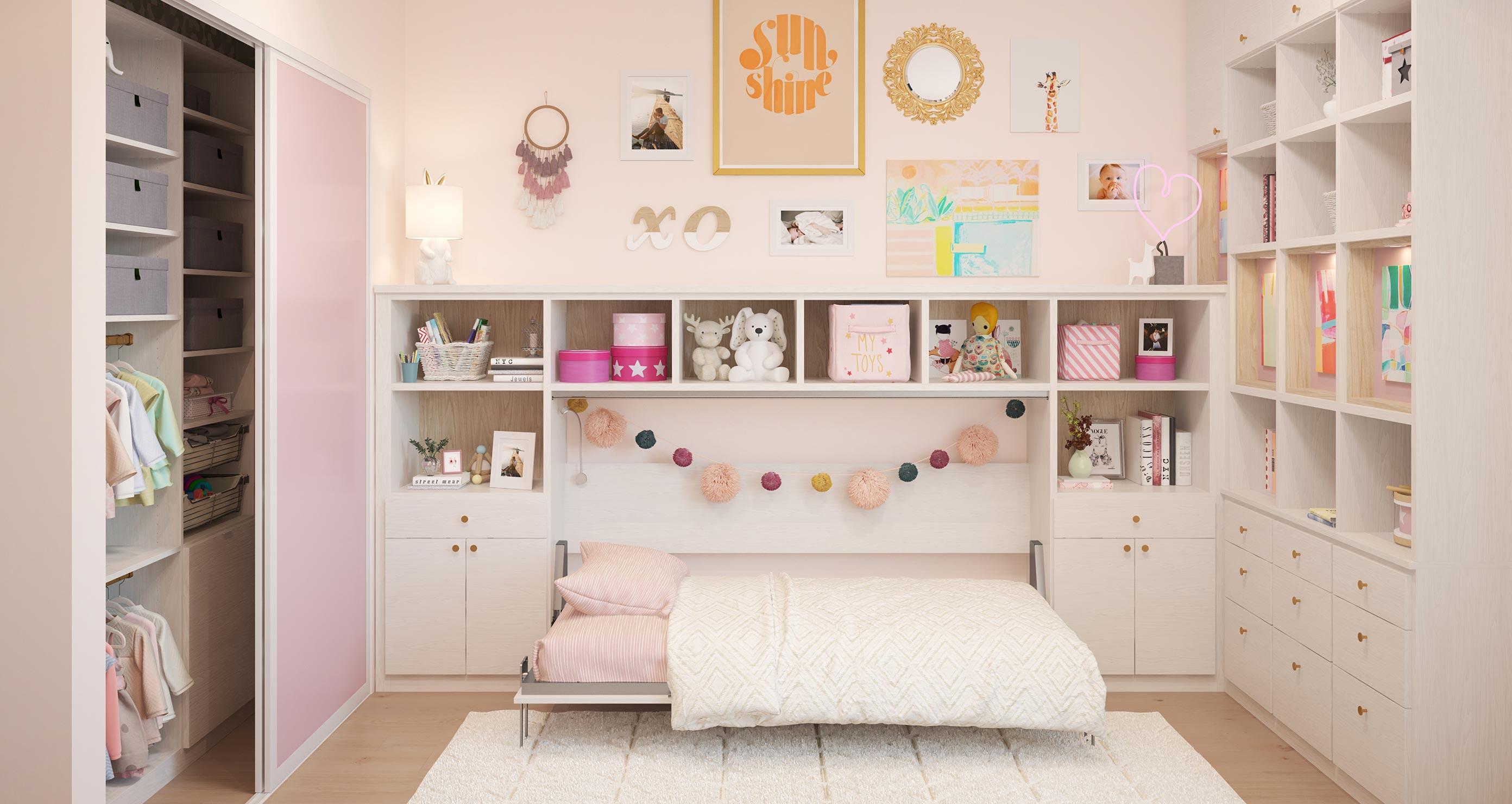
An open space for a changing table can convert into a place for wire baskets and cabinetry for a toddler, or a desk once the child is in school. As the child gets bigger, you can remove one rod to accommodate larger clothing and create more storage space for other items.
2. Stay away from closed drawers
Babies have a lot of little things, like hats, socks, and pacifiers. If stored in a big drawer, they can become cluttered. Keep your baby’s items organized and visible with baskets that can be used later for toys and clothing.
3. Include cubbies for stacked items
A new parent will go through a lot of diapers, diaper cloths, and onesies. Keep these items near the changing table, within easy reach. Cubbies can be used later for toys.
4. Create hanging tiers
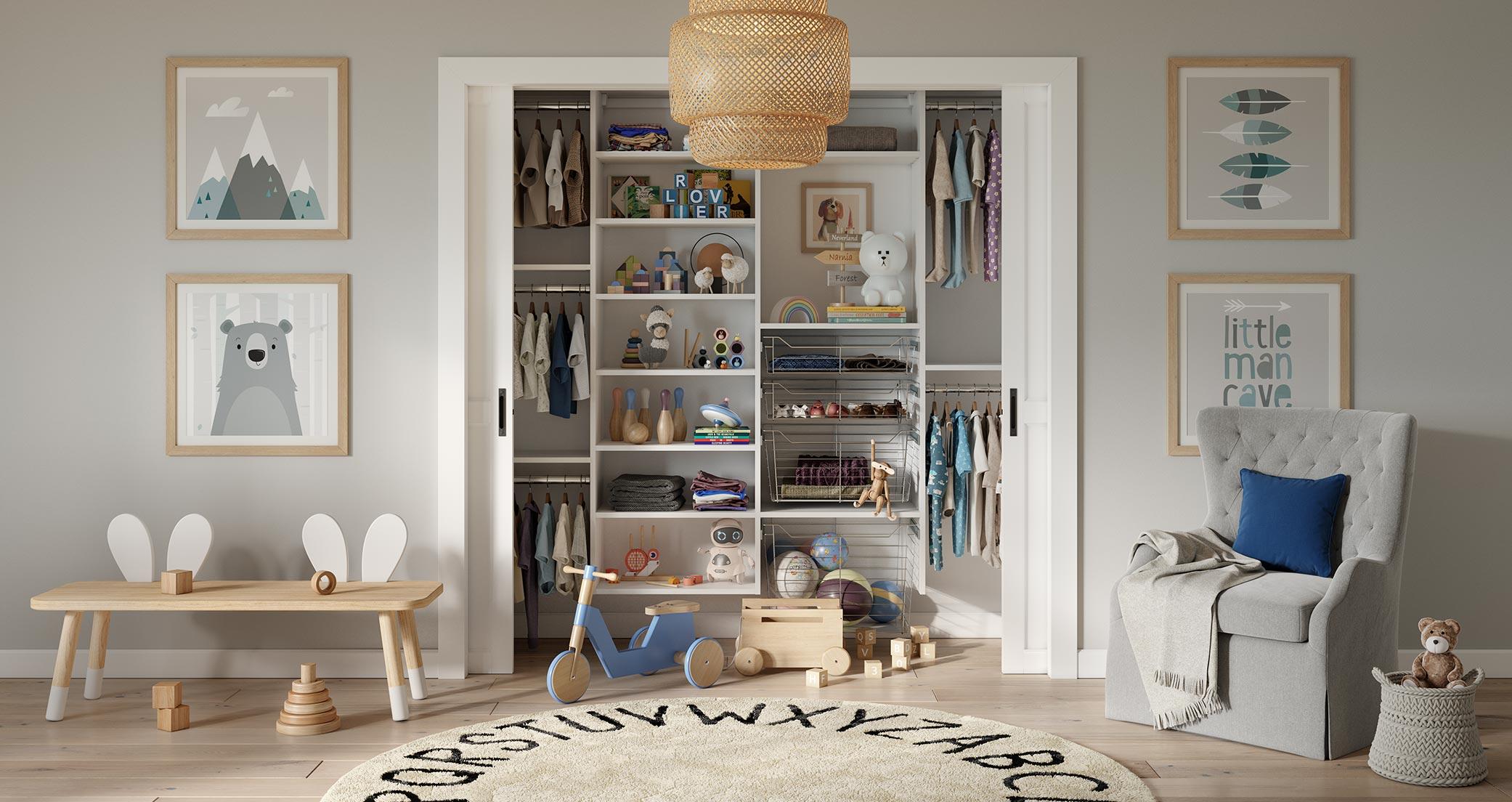
As children explore independence and self-sufficiency, you can start to teach them how to dress themselves and keep things neat. The secret is accessibility. Put everyday clothing in the bottom tier, then store holiday attire and other seasonal items above and out of reach.
5. Create storage for toys and books
You might think shelves are the way to go but for children, bins are a better idea. A child can dump the contents out on the floor and play. When finished, everything goes back in the bin and the bin gets tucked away, making it easier for the child to understand how to clean up.
6. Opt for baskets over drawers
When you store clothing in drawers, kids often reach in and pull everything out, making a mess of their neatly folded laundry. With baskets, they can easily see their favorite pajamas, T-shirts, and pants.
7. Let the space reflect them
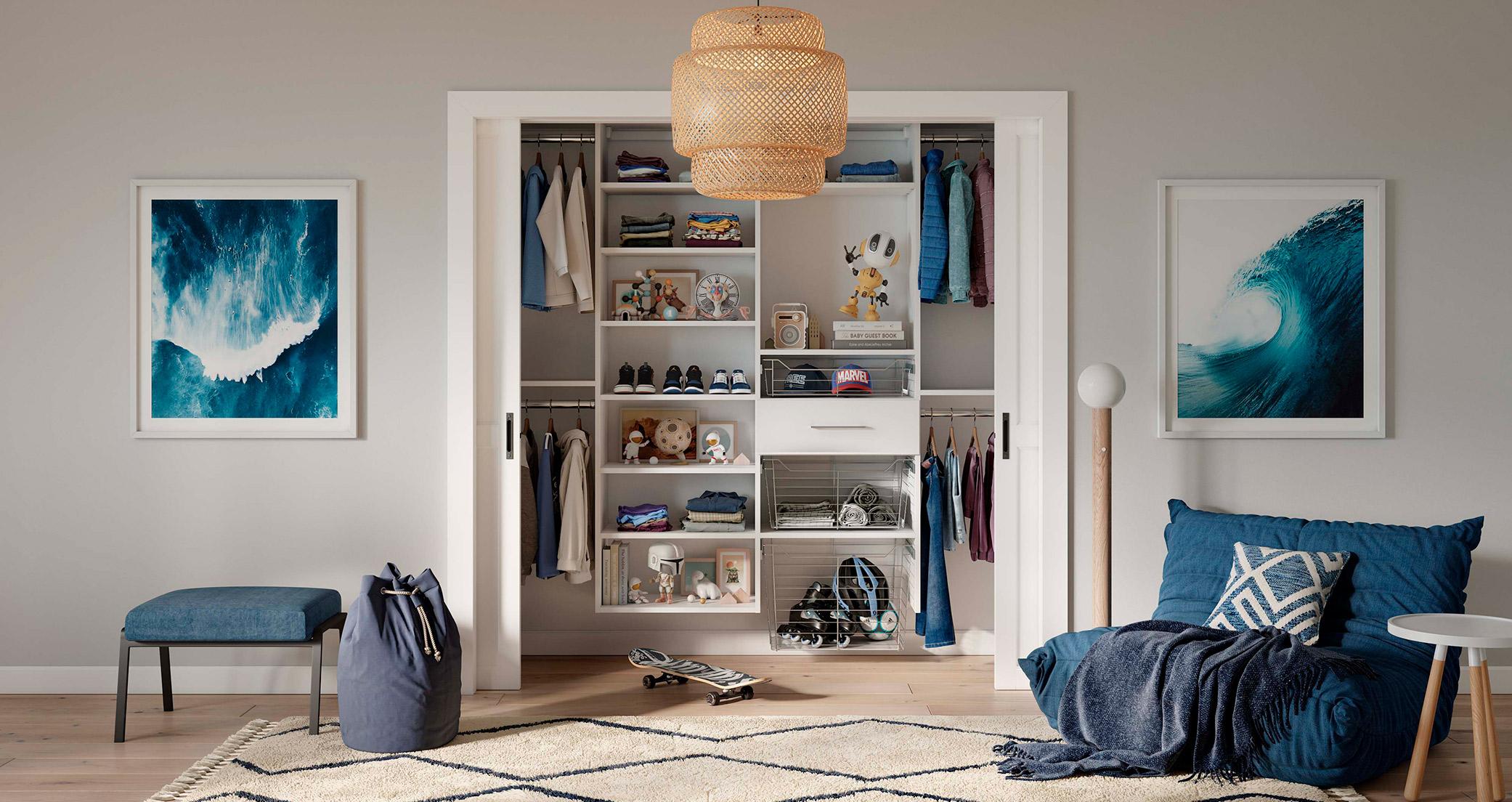
As children embrace their independence, it’s important for them to have a room that feels personal. So when you’re investing in playroom storage, it’s essential that it can adapt aesthetically and functionally over the years. Changing out drawer and door faces or swapping in new hardware is a very inexpensive way to refresh the look of the room to reflect a child’s evolving personality.
8. Provide privacy
It’s important to provide a mix of open and closed storage as your child grows. Drawers and cabinets allow for personal items to be stored away neatly when friends visit.
9. Ensure functionality
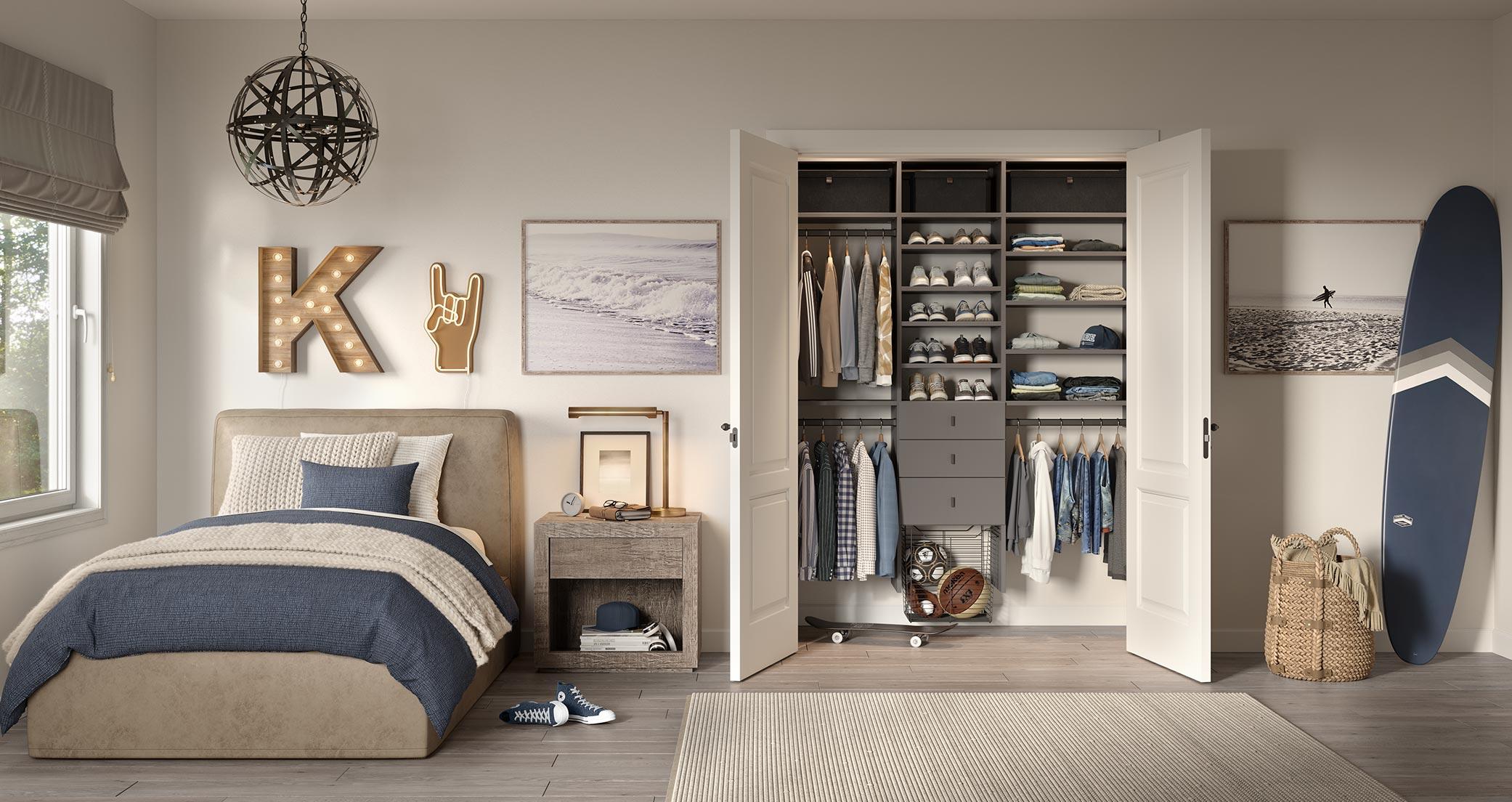
Small children will primarily use their rooms as play areas, but a teenager may use the bedroom to do homework, watch TV, or play video games. To maintain minimal clutter in your teen’s room, work together to create a place for everything. Some things to consider: Where is the charging station? Where should the bookbag be stored? Helping your teen think about organization now will only help in the adult years.